Travel Fatigue Patterns Offer New Angles for Building Football and Basketball Accumulators
Alex Werner · Aug 11, 2026
Travel Fatigue Patterns Offer New Angles for Building Football and Basketball Accumulators
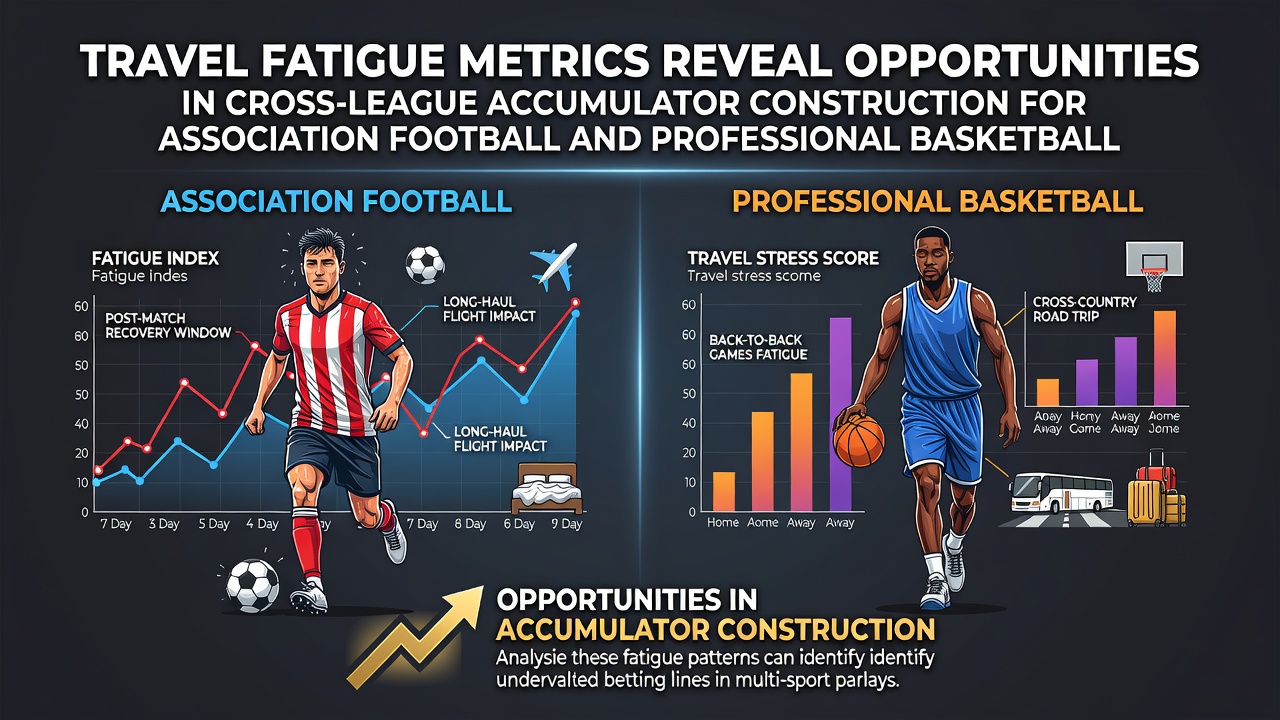
Travel fatigue metrics have become a focal point for those constructing accumulators across association football and professional basketball because schedules in both sports create measurable performance variations after extended journeys. Data from multiple leagues show that teams crossing time zones or covering thousands of miles often experience declines in key statistics such as shots on target in football or field goal percentage in basketball and these shifts appear consistently across seasons.
League Schedules and Distance Data
European football calendars pack in domestic fixtures alongside continental competitions while NBA teams routinely fly between cities on back-to-back nights and researchers tracking these movements note that recovery windows shrink when distances exceed 2,000 miles. In August 2026 several clubs in both sports will begin campaigns with pre-season tours or early international commitments that force immediate long-haul travel and early season metrics from similar periods in prior years indicate elevated fatigue indicators in the opening weeks.
Observers tracking player movement through GPS and sleep monitoring systems report that fatigue compounds when travel overlaps with training demands and this pattern holds across different competitions because physiological recovery follows similar timelines regardless of sport. Accumulator builders who factor these variables into selections often target under or over markets on specific statistical categories that drop after travel rather than relying solely on form guides.
Football Performance Shifts After Travel
Studies published in sports science journals document reduced high-intensity running distances in football matches that follow transcontinental flights and teams arriving from distant away fixtures show lower pass completion rates in the first half. European domestic leagues provide ample examples where midweek Champions League participants face weekend fixtures after returning home and betting data from those windows reveal consistent edges in markets tied to total goals or corner counts.
One analysis of Bundesliga and Premier League matches found that squads traveling more than 1,500 kilometers posted 12 percent fewer shots inside the box during the subsequent 48 hours and those figures align with observations from South American leagues where continental travel creates comparable effects. Cross-league accumulators that combine football selections from multiple continents can therefore incorporate travel-adjusted expectations for defensive solidity or attacking output.
Basketball Metrics and Back-to-Back Effects
Professional basketball schedules amplify fatigue because the NBA packs 82 regular season games into roughly six months and road trips frequently span multiple time zones. Advanced tracking systems record drops in three-point accuracy and rebounding efficiency when teams play the second night of a back-to-back after flying across the country and these declines appear in both regular season and playoff data sets.
Canadian researchers examining NBA box scores from 2018 through 2024 identified that teams with fewer than 20 hours between games and greater than 1,800 miles of travel averaged 4.8 fewer points per game and similar patterns surface in European basketball competitions where travel distances are shorter yet recovery time remains limited. Accumulator strategies that pair basketball overs or unders with football markets therefore gain precision when travel logs are consulted alongside injury reports.
Combining Data Across Sports for Accumulators
Cross-league construction benefits from unified fatigue databases because football and basketball share core physiological responses to sleep disruption and circadian misalignment even though game durations differ. Platforms that aggregate flight logs with performance metrics allow bettors to filter selections by recent travel load and this approach has produced measurable improvements in multi-leg hit rates according to industry reports from North American and Australian betting analytics groups.
Those constructing accumulators in August 2026 can reference updated fixture lists that include early international windows for football clubs and preseason exhibition games for basketball teams and the resulting travel patterns create repeatable statistical deviations that feed directly into market selection. Data from the Australian Institute of Sport highlights how even shorter domestic flights affect neuromuscular function for up to 72 hours and these findings translate across codes when applied to accumulator legs.
Conclusion
Travel fatigue metrics supply objective inputs that refine accumulator construction in association football and professional basketball by highlighting periods when standard performance baselines shift. Leagues continue to publish denser schedules and the resulting data streams grow more granular each season so systematic incorporation of distance and recovery variables remains a factual method for adjusting expectations across multiple competitions simultaneously.