Recovery Periods Shape Accumulator Outcomes Across Tennis Circuits and Soccer Schedules
Ellis Neumann · Jun 16, 2026
Recovery Periods Shape Accumulator Outcomes Across Tennis Circuits and Soccer Schedules
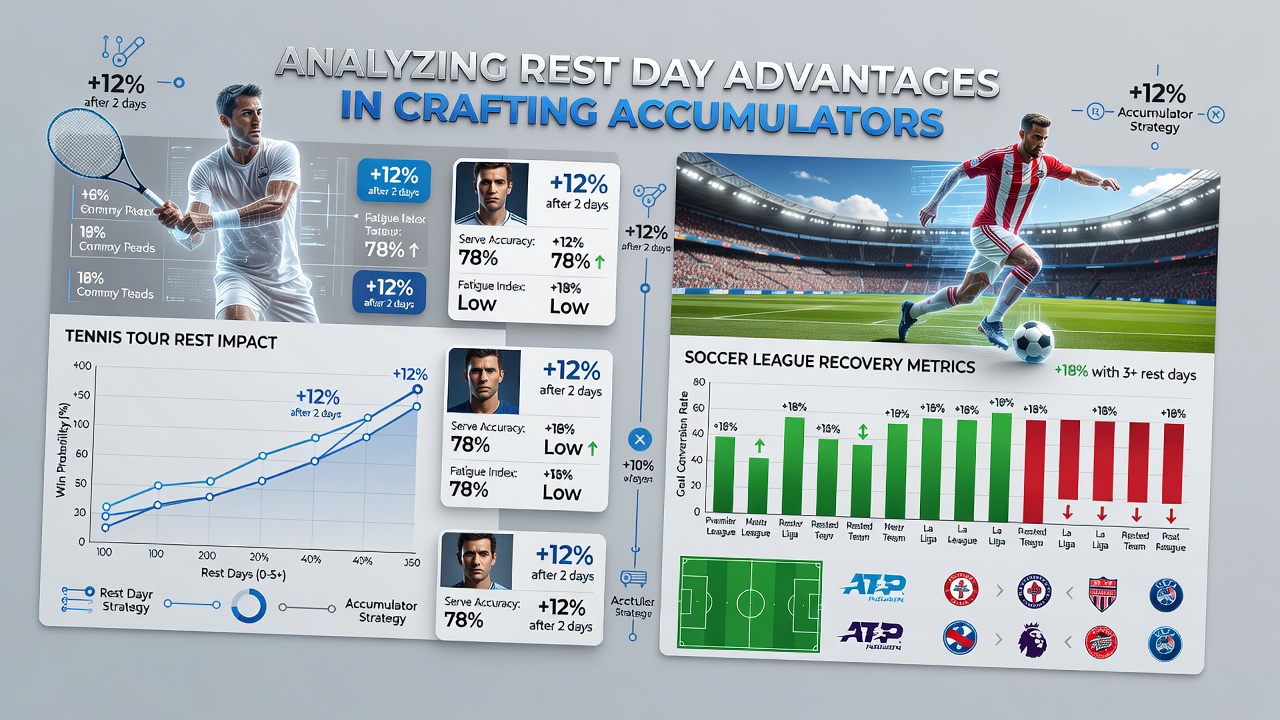
Rest intervals between fixtures influence performance metrics in both tennis tours and soccer leagues, and those patterns feed directly into accumulator construction for bettors who track schedules closely. Data from major governing bodies shows that players with additional recovery time often post higher win percentages, while congested calendars correlate with elevated injury risks and reduced output across multiple legs of a multi-bet.
Tennis Tour Patterns and Rest Advantages
ATP and WTA events frequently cluster matches across consecutive days during grand slams and masters series, yet some draws award byes or schedule gaps that grant extra rest. Observers note that players returning after two or more rest days record improved first-serve percentages and fewer unforced errors compared with those competing on back-to-back days. Tournament data collected through 2025 and into the early months of 2026 indicates that athletes with at least 48 hours between matches advance further in later rounds, creating measurable edges when accumulators include several tennis selections.
Grand slam calendars in June 2026 illustrate the point clearly, with several high-profile singles matches spaced to allow recovery ahead of quarterfinal and semifinal stages. Those scheduling decisions align with physiological research that links extended rest to faster reaction times and sustained power output on court. Accumulator builders who factor these gaps into their selections therefore gain statistical support for legs involving players who benefit from the extra downtime.
Soccer League Congestion and Recovery Metrics
European domestic leagues and continental competitions generate dense fixture lists, particularly when clubs balance league matches with cup ties and international windows. Studies compiled by sports science departments at institutions such as the University of Queensland reveal that teams granted an extra rest day before a fixture display higher pass completion rates and fewer defensive lapses in the opening 30 minutes. Bundesliga records from the 2025-26 campaign, for instance, show clubs playing after a minimum 72-hour break outperforming those returning within 48 hours across multiple performance indicators tracked by league analysts.
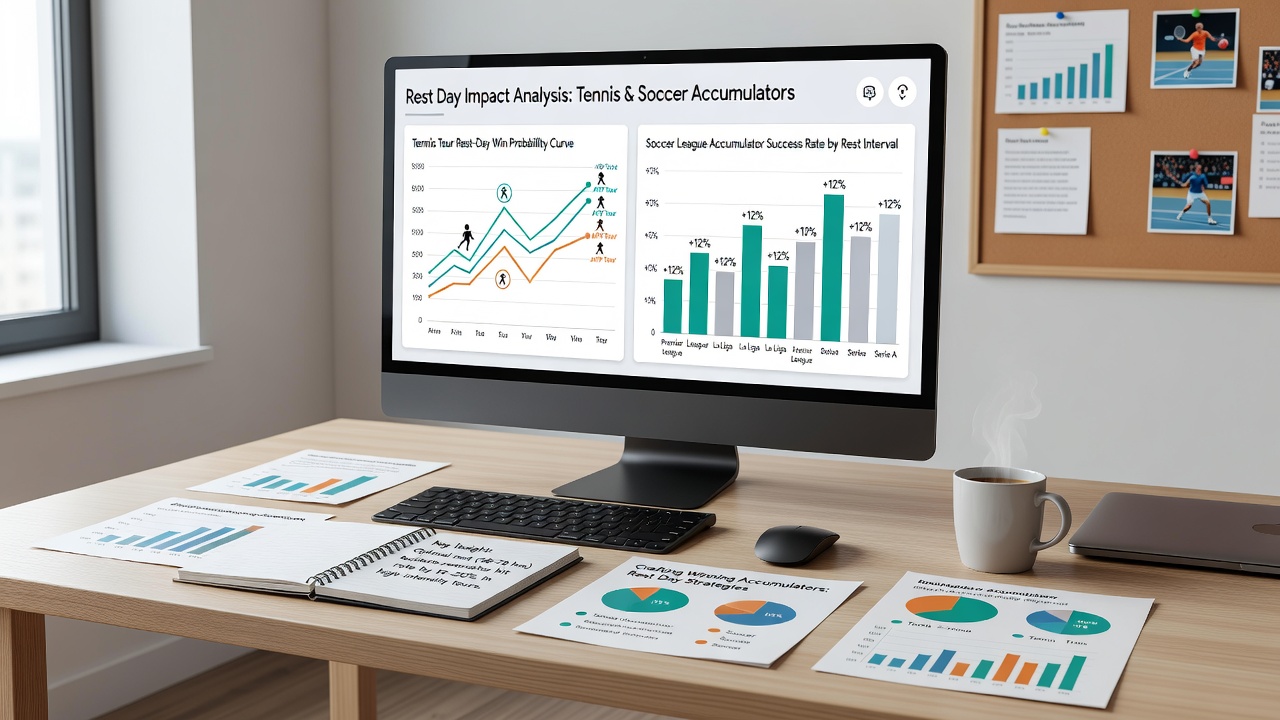
June 2026 marks the conclusion of several domestic seasons alongside the start of international tournaments, a period when fixture gaps widen for some squads while others face rapid turnarounds. League tables released by governing bodies in Germany and Spain document the performance delta between rested and fatigued sides, providing quantifiable inputs for accumulators that combine soccer results with tennis outcomes. Bettors who cross-reference these intervals often construct multi-leg bets around teams or players positioned to exploit the recovery differential.
Combining Data Streams for Accumulator Construction
Integrated analysis of rest-day statistics across both sports allows for layered accumulator strategies that pair a rested tennis player with a soccer side enjoying similar advantages. Tournament software and league tracking systems supply the raw numbers, while independent research papers quantify the performance uplift associated with each additional recovery hour. One study published through an Australian sports institute demonstrated that athletes receiving 60 or more hours between events reduced error rates by measurable margins, a finding that translates across court and pitch environments.
June schedules in 2026 further highlight these overlaps, as tennis events in Europe coincide with the final weeks of several soccer campaigns. Observers tracking both calendars identify clusters where rested competitors appear in multiple legs, offering structured opportunities for accumulators built on recovery advantages rather than form alone. Regulatory reports from bodies such as the Australian Sports Commission and the German Olympic Sports Confederation supply additional context on injury trends that reinforce the value of monitoring rest intervals.
Practical Applications in Multi-Bet Markets
Accumulators spanning tennis tours and soccer leagues gain precision when rest data sits at the core of each selection. Historical match logs show that selections involving players or teams with documented recovery edges post higher completion rates across four-leg and five-leg combinations. Software tools used by professional syndicates now incorporate these variables alongside traditional statistics such as head-to-head records and surface preferences.
The approach remains consistent regardless of market fluctuations: identify the rest differential, verify it against published schedules, and integrate it into the overall structure of the accumulator. June 2026 fixtures provide fresh examples where gaps between matches align across sports, allowing data-driven builders to test the method under current conditions.
Conclusion
Recovery intervals exert measurable influence on outcomes in tennis and soccer, and those effects translate into accumulator frameworks when bettors incorporate verified schedule data. Research from multiple regions continues to document performance gains tied to rest, while 2026 calendars supply ongoing case studies for refinement. The resulting strategies rely on objective metrics rather than speculation, supporting systematic construction across both sports.